Walk-Ins Welcome
- Wait Time: 15 Minutes
- Open Monday–Saturday: 7AM – 7PM
- Pre-Register
Think it might be broken? Walk in and find out today. On-site digital X-ray, splints, braces and walking boots — no appointment needed, Monday through Saturday, 7 AM to 7 PM.
A rolled ankle on a trail, a wrist that swelled up an hour after a stumble in the driveway, a foot that still hurts four days after you thought you'd walked it off. From the outside, a bad sprain and a broken bone can look identical, and how much it hurts is a poor guide to which one you have.
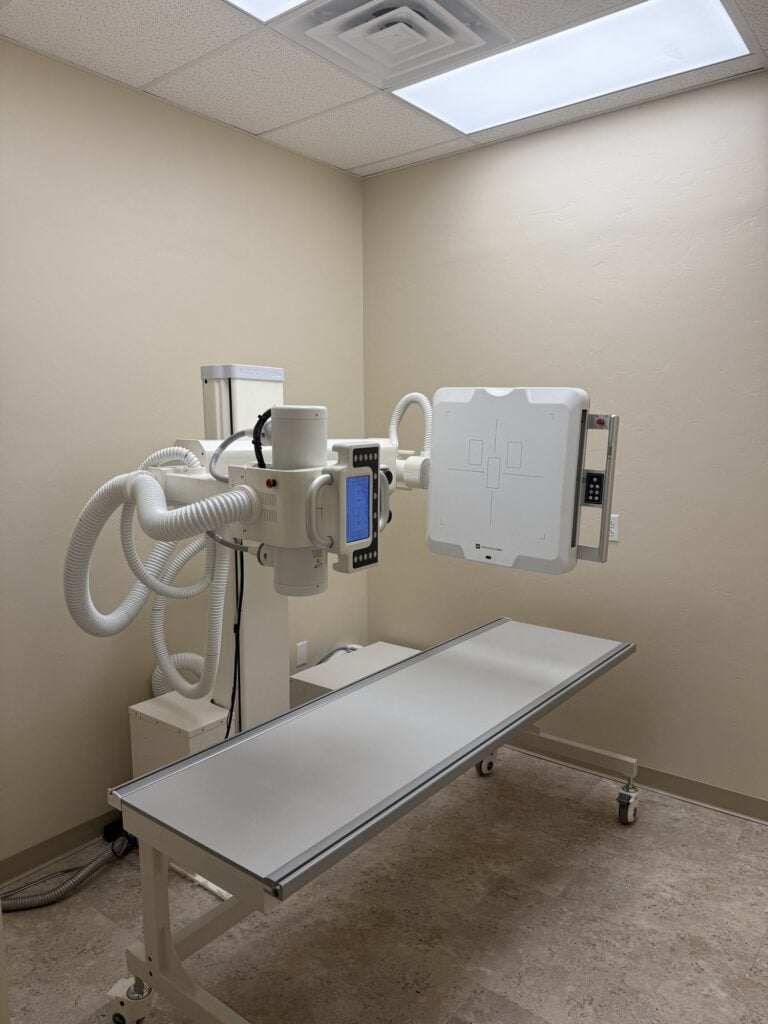
Sanova Urgent Care evaluates injuries like these on North Oracle Road, with digital X-ray in the building. No appointment is needed. Walk in Monday through Saturday, 7:00 AM to 7:00 PM, get examined, get imaged if your clinician thinks imaging will change what happens next, and go home with a splint, brace or walking boot when one is indicated.
Plenty of injuries settle down on their own. These are the ones that tend to be worth an evaluation rather than a week of ice and waiting:
Children are welcome. Our clinicians evaluate injuries in patients of every age, from newborns through high school, and pediatric urgent care is a regular part of what we do.
The injuries we see track closely with how this part of Arizona actually lives.
Loose granite and washed-out trail edges in Catalina State Park and the canyons above Oracle Road produce a steady stream of ankle and wrist injuries, and they tend to arrive in the cooler months when everyone is out hiking again. Pickleball and golf around SaddleBrooke, Sun City Oro Valley and Rancho Vistoso bring in Achilles and calf injuries, wrist fractures from backward falls, and shoulder complaints. Monsoon storms make pavement and washes slick and cause falls in parking lots and on patios. Dry-season ladder and roof work sends people in with heel, wrist and rib injuries. And a large share of what we see is simply a fall at home, on a step, a curb or a wet tile floor.
None of that changes how a fracture is evaluated. It does mean the clinicians here see these specific patterns constantly, and it means the clinic is a short drive from where the injury happened rather than a trip down into Tucson.
Not every painful injury needs imaging, and getting an X-ray you do not need is not doing you a favor.
Your clinician starts with the story of how it happened and a physical exam: where the tenderness is, whether it sits over bone, how much swelling there is, your range of motion, whether you can bear weight, and how the joints above and below are doing. For ankle and knee injuries, clinicians commonly use validated decision guides such as the Ottawa rules to help decide whether imaging is likely to change anything.
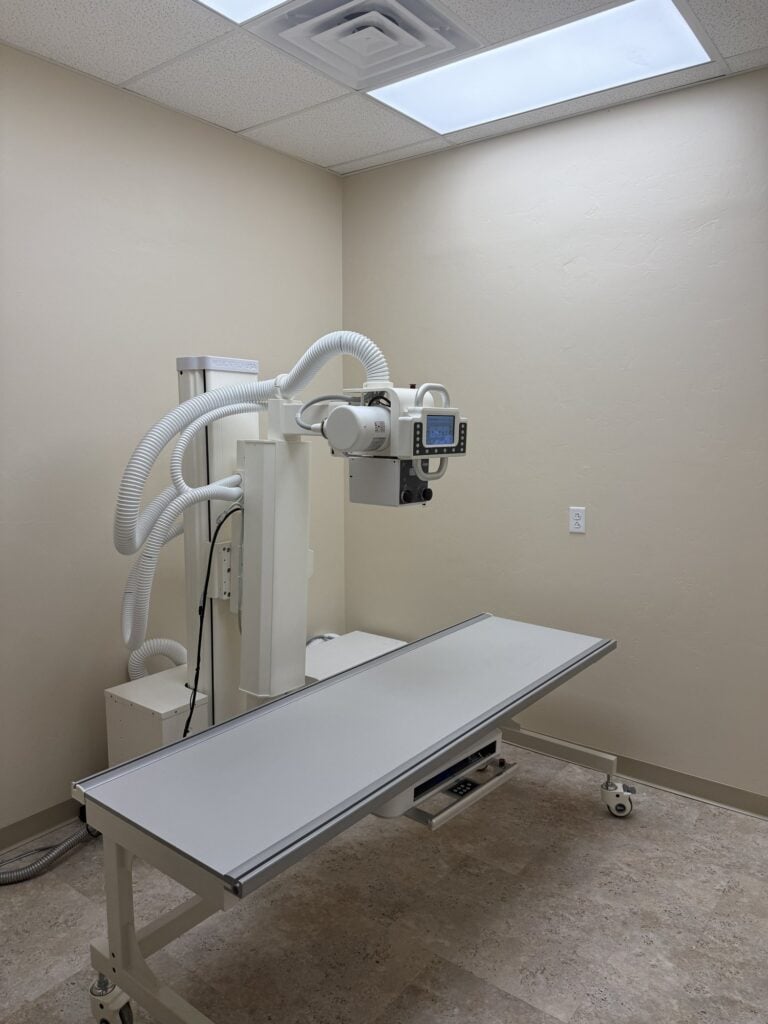
If that evaluation points toward a possible fracture, dislocation or another finding that imaging would clarify, your clinician may recommend an X-ray on site.
Digital X-ray is available in the building for chest, limb and spine imaging when clinically appropriate. Practically, that means a few things worth knowing before you come in:
There is no separate trip to an imaging center, no second appointment, and no second front desk. The imaging happens during the same visit.
Your clinician reviews your images alongside your exam findings before you leave, so in most cases you leave with an answer and a plan rather than a callback days later.
The imaging portion of the visit is short. Most of the time in a visit like this is the exam and the treatment that follows.
$75 per study for self-pay patients, on top of the standard visit fee. Most insured patients owe less than that, depending on their plan. Full pricing and the plans we accept are on our costs and insurance page.
This is worth saying plainly, because it is where a lot of injuries go sideways.
Some fractures do not show up on a first X-ray. The scaphoid, a small bone on the thumb side of the wrist, is the classic example: it commonly looks normal on the day of injury and becomes visible only a week or two later. Early stress fractures often behave the same way. In children, injuries through a growth plate can be subtle or invisible on a first film.
When the exam suggests a fracture but the images look normal, the right answer is usually not "you're fine." It is to treat it as a possible fracture, immobilize it, and arrange a recheck or orthopedic follow-up. Your clinician will tell you which situation you are in and what to do next.
When an injury needs to be held still, Sanova can provide orthopedic support on site, based on the clinical evaluation, the imaging findings and what is in stock. That may include a splint, an orthopedic brace, or a walking boot.
Immobilizes an injury while swelling is still changing, which is why splints are used early rather than hard casts.
Supports a joint while allowing controlled motion.
Protects a foot or ankle injury while letting you move around. Not every injury needs or qualifies for a boot, and the decision is a clinical one rather than a preference.
Definitive casting and operative fracture care are handled by orthopedics. When your injury needs that, we immobilize it appropriately, give you instructions for the interim, and refer you on.
Insurance coverage for durable medical equipment and orthopedic supports varies by plan. Our costs and insurance page lists what we accept, and the front desk can help you understand what applies to your visit.
Depending on your injury and examination, treatment may include:
If pain persists after the acute injury settles, or if you are dealing with a longer-running joint problem rather than a new injury, that is handled on our back, knee and joint pain page.
Growing bones fail differently than adult bones. Buckle fractures and growth-plate injuries are common, and both can be subtle on imaging. A child who refuses to bear weight on a leg, or who will not use an arm normally, should be evaluated even if the X-ray looks unremarkable.
A fall from standing height is enough to fracture a wrist, a hip, a pelvis or a vertebra in someone with reduced bone density, and pain levels can be deceptively mild. Anyone who cannot stand or walk after a fall, or who has hip, groin or back pain after a fall, needs prompt evaluation. Hip and pelvis injuries in particular are emergency-department problems. The CDC's STEADI fall-prevention resources are a useful starting point if falls have become a pattern.
Apixaban, rivaroxaban, warfarin, clopidogrel and similar medications raise the risk of significant bleeding after what looks like a minor injury. Tell your clinician at check-in. Any head injury while on a blood thinner should be evaluated in an emergency department, not urgent care.
Tell the front desk and your clinician if you are or might be pregnant. Imaging decisions and shielding are handled accordingly, and the evaluation proceeds either way.
Many stable, isolated limb injuries can reasonably start with an urgent-care evaluation. A closed ankle injury, a swollen wrist after a fall, a painful finger, an injured knee that you can still move: these are the kinds of injuries on-site X-ray was built for.
Our clinician will determine whether your injury can be safely managed here or requires emergency or hospital-level care. If it is the latter, we tell you directly and help you get there. If you want to think through the general difference before you have an injury, we cover it in more detail in urgent care versus the ER.
Self-pay pricing is published rather than quoted on request. Most insured patients pay less, depending on their plan. We accept most major Arizona plans, including Medicare, AHCCCS, Tricare, UnitedHealthcare, Optum, Blue Cross Blue Shield, Aetna, Cigna and Arizona Complete Health. Current pricing and the full plan list are on our costs and insurance page.
Bring a photo ID, your insurance card, and a list of your current medications, including any blood thinners. If the injury happened at work, bring your employer's contact information and any claim details you have.
Sanova Urgent Care is at 15883 N Oracle Rd, Suite 101, Tucson, AZ 85739, on the west side of Oracle Road next to Carlota's, across from Tractor Supply. Free parking is directly outside the front door, the entrance is ground level with no stairs, and the clinic is wheelchair accessible, which matters more than usual when you are arriving on crutches or holding a wrist.
The clinic sits on the Oracle Road corridor, a short drive for patients in the communities below. For a possible fracture, that distance is the whole point: the nearest hospital emergency departments are considerably farther south, and an isolated limb injury rarely needs one.
Everything you need to know before your visit. Can't find your answer? Call us at (520) 232-2525.