
This guide to sprains, strains and broken bones was medically reviewed by Dr. Kiyan Rad, DO — Medical Director, Sanova Urgent Care, Tucson, AZ
You rolled your ankle on the trail. Your kid took a hard fall at practice. You reached for something and heard a pop. Now it's swelling, it hurts, and one question won't leave you alone: is it broken?
The honest answer comes from an X-ray — not from how much it hurts, not from whether you can still move it, and not from a search engine. Fractures that feel like "just a sprain" get walked on for days. Sprains that look terrifying turn out to be nothing structural. You cannot reliably tell the difference without imaging.
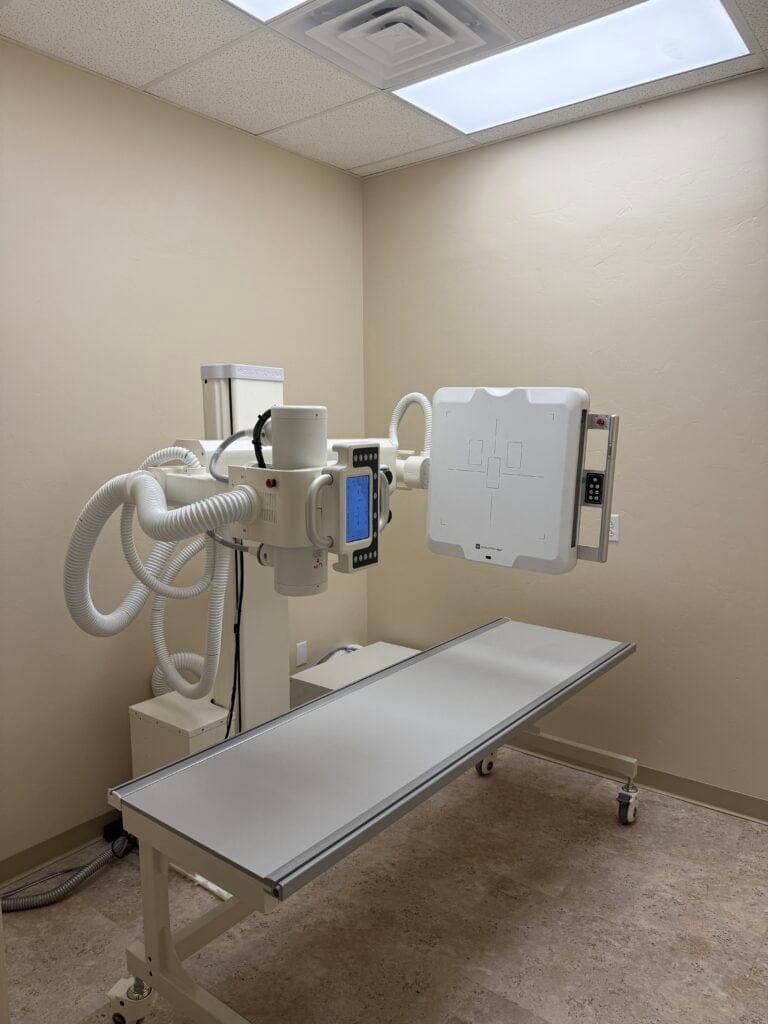
Sanova Urgent Care offers walk-in X-ray in Oro Valley and Catalina, with digital X-ray in the building. Walk in with an injury, get imaged, get a diagnosis, and leave with treatment — one visit. No referral to an imaging center, no radiology scheduling, no drive across town.
Open Monday–Saturday, 7:00 AM – 7:00 PM · Closed Sunday
15883 N Oracle Rd, Suite 101, Tucson, AZ 85739
Sprain, strain, or fracture: what each one means
These get used interchangeably. They're different injuries with different treatment.
A sprain
An injury to a ligament — the tissue that connects bone to bone at a joint. Ankles are the classic site; wrists, knees, and thumbs are close behind. Sprains range from a mild stretch to a complete tear. The American Academy of Orthopaedic Surgeons notes that even with appropriate treatment these injuries can take a long time to heal, and the most severe may need surgical repair.
A strain
An injury to a muscle or tendon — the tissue connecting muscle to bone. Hamstrings, calves, and the rotator cuff are common. Strains usually come from overload or sudden force and show up as pain, tightness, and sometimes bruising.
A fracture
A broken bone — anything from a hairline crack to a full break. Here's what surprises people: some fractures hurt less than a bad sprain. Stress fractures in particular start as discomfort that only shows up at the end of activity — exactly the kind of ache you're tempted to push through. Meanwhile a severe ankle sprain can swell so dramatically it looks like a textbook break.
That's why X-rays exist. AAOS puts it plainly: X-rays are the most common way to evaluate a fracture, because they show the bone itself rather than the swelling around it.
Broken bones need an X-ray, not rest and ice
Some injuries are fine with rest, ice, compression, and elevation. Others need imaging. Mayo Clinic advises getting checked whenever you have pain and swelling and think you may have sprained something — because what feels like a sprain can be a torn ligament or a break. These are the signs that make imaging the right call:
Children: err toward imaging
Kids have growth plates — zones of developing cartilage near the ends of their bones that are structurally weaker than mature bone. AAOS is direct about this: because the growth plate helps determine the future length and shape of the mature bone, these fractures usually need prompt attention, and improper treatment can leave a limb crooked or unequal in length. A child's "sprain" that's actually a growth plate fracture deserves a look. When in doubt, image it.
What happens at a walk-in X-ray in Oro Valley visit
Walk in. No appointment. Monday–Saturday, 7am–7pm.
A provider examines the injury and decides whether imaging is needed.
Digital X-ray, right here. High-resolution images, taken in the building.
Your provider reads them with you during the visit — no waiting a day for a radiology report.
Treatment starts before you leave. Splinting for fractures, bracing for sprains and partial tears, and a referral to orthopedics if surgical evaluation is warranted.
Splinting rather than casting at this stage is deliberate: swelling is still rising in the first days after a fracture, and a rigid cast applied too early can constrict circulation. Full detail on what we handle is on our X-ray and fracture care page.
What it costs
Walk-in X-ray in Oro Valley pricing is posted, all self-pay:
physical
If you're using insurance, we accept:
HSA and FSA cards work too. See costs and insurance for the full picture.
Built for how people here get hurt
North of Tucson is active country, and the injuries follow.
Tuesday at 6pm, before Thursday's practice
Ankle rolls on the soccer pitch, wrist catches on the court, shoulder collisions on the football field. We're open until 7pm and on Saturdays specifically because youth sports don't keep office hours.
Catalina foothills and Oro Valley trails
The trail systems here don't forgive a misstep. A twisted ankle two miles from the trailhead is unpleasant. Not knowing if it's fractured when you get back to the car is worse.
SaddleBrooke and Sun City Oro Valley
Pickleball, golf, tennis, cycling. For active adults over 55, an undiagnosed fracture — especially in the foot or wrist — can have real consequences if it's walked on. The goal is getting back on the court, safely.
Sports physicals while you're thinking about it
If your athlete needs a physical before tryouts, walk in — no appointment, $45 self-pay. Most Tucson-area schools and leagues require a current one before competition, and the week before tryouts is not the time to discover every office is booked. Details on our sports physical page.
When to go to the ER instead
Urgent care handles most sprains, strains, and simple fractures. Go to an emergency room for:
- !Bone visibly through the skin, or a limb that's obviously misshapen
- !Numbness, tingling, or a cold or pale limb below the injury
- !A suspected hip or pelvic fracture, especially in an older adult
- !Head, neck, or spine injury
- !Uncontrolled bleeding
If you're unsure, call (520) 232-2525.
Serving Oro Valley, Catalina, SaddleBrooke, Marana, and North Tucson
We're at 15883 N Oracle Rd, Suite 101 — the walk-in clinic on the Oracle Road corridor for Oro Valley, Rancho Vistoso, Catalina, Sun City Oro Valley, Marana, and SaddleBrooke.
Imaging stays in the building
Digital X-ray is taken and read here, by the provider who examined you — not sent out and reported back the next day.
The people you'll actually see
Dr. Kiyan Rad, Beth Brown FNP, and Kim Wall FNP. Meet the team.
| Day | Hours |
|---|---|
| Monday–Saturday | 7:00 AM – 7:00 PM |
| Sunday | Closed |
Walk-in X-ray in Oro Valley: common questions
Can urgent care X-ray a broken bone?
Yes. Sanova has digital X-ray in the building. Images are taken and read during your visit.
How much does an X-ray cost without insurance?
$75 self-pay, posted. An urgent care visit is $140.
How do I know if it's sprained or broken?
You can't reliably tell without an X-ray. Point tenderness on the bone, inability to bear weight, rapid swelling, or a pop at injury all warrant imaging.
Can you put a cast on?
We splint acute fractures while swelling is still present and refer to orthopedics for casting and follow-up when needed.
Do you see kids with sports injuries?
Yes. Children's growth plates make imaging especially important; we lean toward X-raying a child's injury when in doubt.
Do you do sports physicals?
Yes — walk in, $45 self-pay, bring the school form.
Should I go to the ER for a broken bone?
Go to the ER for open fractures, obvious deformity, numbness or a cold limb below the injury, or suspected hip, spine, or head injury. Most other fractures can be handled here.
Don't walk it off
If it's swollen, tender on the bone, or you can't put weight on it — come in. Ten minutes at a walk-in X-ray in Oro Valley beats two weeks of wondering.
Sanova Urgent Care · 15883 N Oracle Rd, Suite 101, Tucson, AZ 85739 · Get directions
This article is for general information and does not replace an evaluation by a licensed provider. In an emergency, call 911.

Dr. Kiyan Rad, DO, is a board-certified internal medicine and obesity medicine physician and Medical Director of Sanova Urgent Care in Catalina, AZ, serving Oro Valley, SaddleBrooke and north Tucson. He is an Assistant Clinical Professor of Medicine at the University of Arizona College of Medicine – Tucson, President of the Medical Executive Committee at Encompass Health Rehabilitation Hospital of Northwest Tucson, and former Chief of Medicine at Carondelet St. Joseph’s Hospital. He earned his DO from Michigan State University College of Osteopathic Medicine. On this blog, he shares practical guidance on urgent care, chronic disease, metabolic health and recovery after a hospital stay.