— RESPIRATORY & RAPID TESTING

Rapid Flu, Strep & COVID Testing in Oro Valley, Catalina & NW Tucson

Rapid flu, strep and COVID testing gives you an answer during your visit. Fever, sore throat, cough, body aches: flu, strep, COVID, and an ordinary cold can look nearly identical from the outside, and the treatment for each is completely different. Sanova Urgent Care tests on site, reviews results with you during the same visit, and starts treatment before you leave. No appointment. Open Monday through Saturday, 7 AM to 7 PM, on North Oracle Road in Catalina.
⚡ Results During Your Visit ✓ No Appointment Needed 📄 Work & School Notes Same Day 🕐 Mon–Sat, 7 AM–7 PM
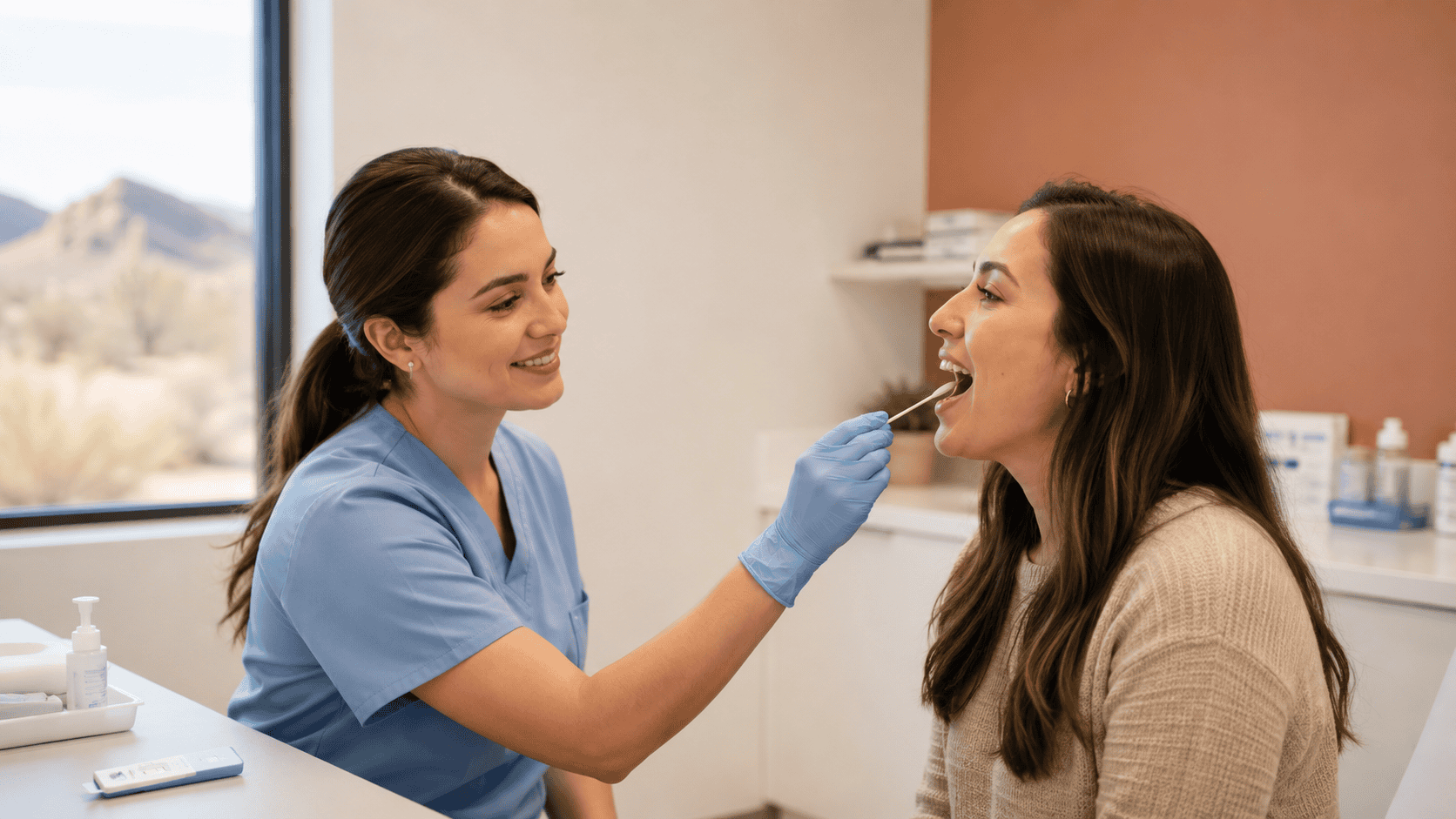
Clinician performing rapid flu and strep testing at a walk-in urgent care clinic in Catalina, Arizona

If It's the Flu, the First 48 Hours Matter

⏱️ Antiviral medication for influenza works best when it's started within 48 hours of your first symptom. Oseltamivir (Tamiflu), baloxavir (Xofluza), and the other flu antivirals can shorten illness and reduce the risk of complications — but that benefit drops off sharply the longer you wait. If you woke up feeling like you were hit by a truck, today is the day to be seen, not Thursday.

The same clock applies in reverse to strep: untreated strep throat stays contagious and carries a small risk of complications, and you're typically no longer contagious once you've been on the right antibiotic for 12 to 24 hours and your fever has broken. Every day you wait is another day out of work or school.

CDC guidance is also explicit that for people at higher risk of flu complications, treatment should not wait for a laboratory result — the clinical picture is enough to start.

Who Shouldn't Wait At All

Flu antivirals are recommended promptly — often regardless of test timing — for people at higher risk of complications:

✓Adults 65 and older
✓Children under 5, especially under 2
✓Pregnant patients and those up to two weeks postpartum
✓Anyone with asthma, COPD, or other chronic lung disease
✓Heart disease, diabetes, kidney or liver disease
✓Weakened immune systems, including from medication or cancer treatment
✓Neurologic and neurodevelopmental conditions
✓Residents of nursing homes and long-term care facilities
✓People with a BMI of 40 or higher

If you or a family member is on this list and has a fever with body aches, come in the same day rather than waiting to see how it goes.

Flu, COVID, Strep, Cold or RSV? How to Tell Them Apart

Short answer: often you can't, and neither can we without testing. That's exactly why testing exists. Still, the patterns below are what our clinicians look for.

SymptomInfluenzaCOVID-19Strep ThroatCommon ColdRSV
How It StartsAbruptly — people often name the hourGradual over a few daysFairly suddenGradualGradual, worsens days 3–5
FeverCommon, often highCommonCommonRare or mildCommon in children
Body AchesSevere, a hallmarkCommonPossibleMildMild
Sore ThroatCommonCommonSEVERE — main symptomCommon, mildCommon
CoughCommon, dryCommonUsually absentCommonCommon, often wheezy
Runny Nose / CongestionSometimesCommonUsually absentProminentProminent
HeadacheCommon, significantCommonCommonRareUncommon
ExhaustionSevere, can last weeksCommonModerateMildModerate
Tells"Hit by a truck" onsetVariable by variantWhite patches on tonsils, swollen neck glands, no coughSneezing, mild, self-limitedWheezing, fast breathing in infants
💡 Notice the pattern in the strep column — cough, runny nose, hoarseness, and mouth ulcers argue against strep. CDC guidance is that when those viral features are present, strep testing usually isn't the right move. If someone has a sore throat with a hacking cough and a streaming nose, we're generally looking at a virus, and an antibiotic won't help.

Flu, Strep & COVID Testing On Site, Same Visit

Rapid influenza A & BFlu, and which typeDuring your visit
Rapid strep (group A)Strep throatDuring your visit
COVID-19Active SARS-CoV-2 infectionDuring your visit
Throat cultureConfirms strep after a negative rapid test in childrenSent to lab
Chest X-rayPneumonia, when the exam suggests itDuring your visit, digital, on site
Blood work & walk-in drawsWhen the picture needs more than a swabDrawn on site, sent to lab (about one business day)

Note: Because we're an urgent care clinic and not a standalone testing site, a positive result doesn't end the visit — you leave with a diagnosis, a treatment plan, prescriptions sent to your pharmacy, and documentation for work or school.

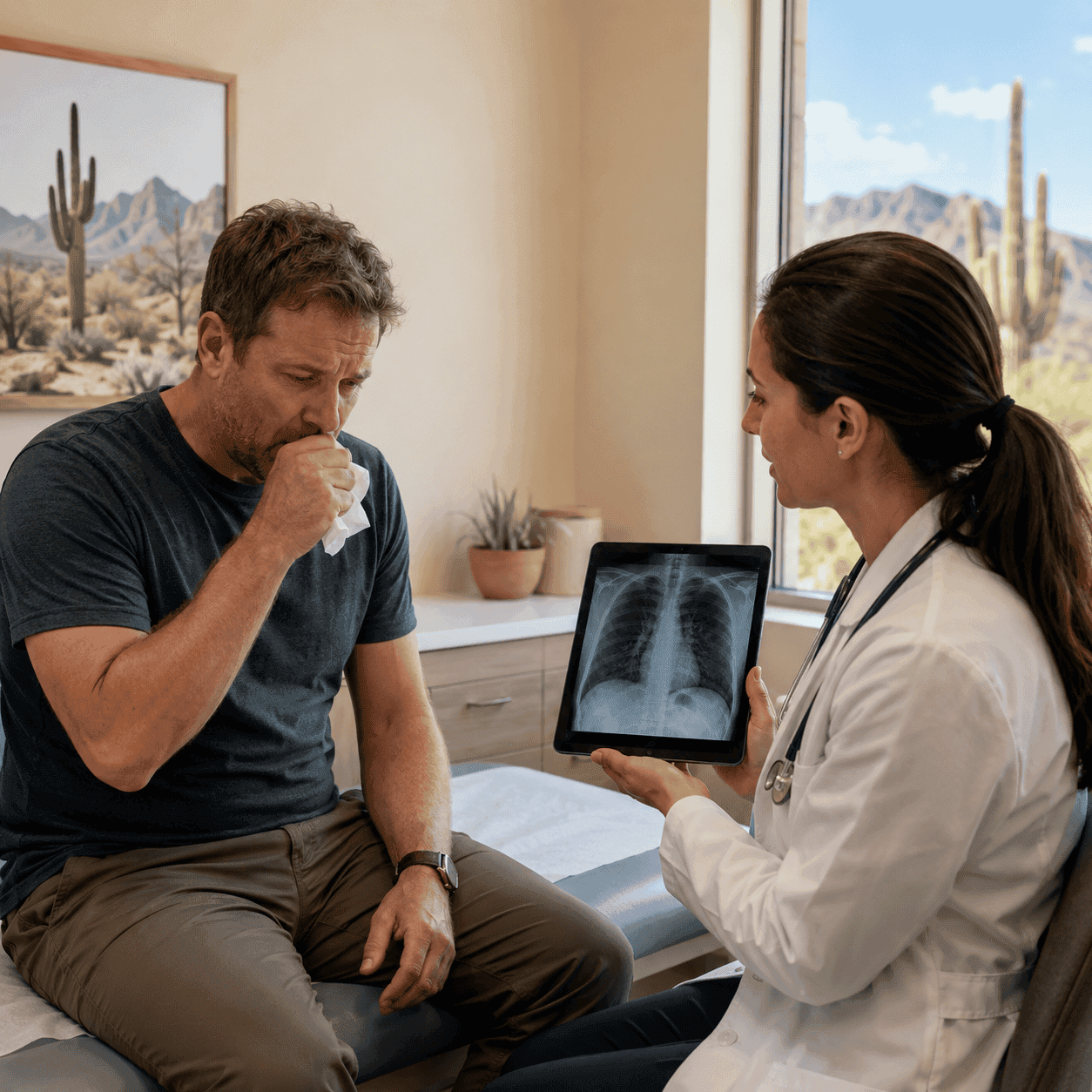
Adult checking a thermometer for fever before walk-in flu, strep and COVID testing at Sanova Urgent Care

Walk-In Testing Close to Home

When you feel this bad, the last thing you want is a drive into central Tucson. Here's what getting to us looks like from the communities we serve.

Oro Valley

Roughly 10 to 15 minutes north on Oracle Road from central Oro Valley, near the Oro Valley Marketplace corridor. We open at 7 AM, so you can be tested, treated, and have a work note in hand before the day starts.

Catalina & SaddleBrooke

We're your neighborhood clinic — located in Catalina itself, minutes from the SaddleBrooke communities off Oracle Road. For 85739 residents, this is the closest walk-in testing option, with no drive down into the valley. Particularly relevant for SaddleBrooke residents, since adults 65 and older are among those who benefit most from starting flu treatment early.

Rancho Vistoso

About 5 minutes from the Rancho Vistoso Boulevard and Oracle Road intersection, convenient for families near Painted Sky Elementary, Wilson K-8, and Ironwood Ridge High School. When something is going around a classroom, we can test the whole family in one visit.

Northwest Tucson & Marana

An easy drive via Tangerine Road or Oracle Road from Marana, Dove Mountain, and Continental Ranch. On-site X-ray means that if a cough turns out to be pneumonia, it's diagnosed here rather than at a second appointment.

Drive times are approximate and depend on traffic and your exact starting point.

When to Test — Timing Changes the Answer

Testing too early is one of the most common reasons people get a result that doesn't match how they feel.

Flu

Rapid flu tests perform best in the first three to four days of illness, when the amount of virus is highest. That happens to line up with the window when antiviral treatment helps most — so early is better for both reasons.

COVID-19

Rapid antigen tests can miss an infection in the first day or two, before viral levels rise. A negative rapid test in someone with clear symptoms and a known exposure doesn't rule COVID out — it may mean testing too early. Your clinician will weigh the result against your symptoms, your exposure history, and the exam rather than treating the strip as the final word.

Strep

Rapid strep testing is accurate and fast, and a positive result is reliable. A negative one in a child aged three or older is followed with a throat culture, because strep can be missed and treating confirmed strep in children reduces the risk of rheumatic fever. In adults, CDC guidance is that routine backup culture generally isn't needed.

💬 This is the argument for being evaluated rather than relying on a home test alone. A drugstore antigen test gives you one data point. A visit gives you an exam, the right test at the right time, an interpretation that accounts for everything else going on, and treatment the same day if you need it.

What Happens After the Test

Clinician reviewing test results and a treatment plan with a patient at Sanova Urgent Care

If It's Influenza

When you're within the treatment window or at higher risk of complications, we can prescribe an antiviral — oseltamivir (Tamiflu), baloxavir (Xofluza), or another appropriate agent — sent electronically to your pharmacy. Otherwise, treatment is aimed squarely at making you functional: fever and body ache control, cough management, fluids, and clear instructions on what would mean you need to be seen again.

If It's Strep

Strep is a bacterial infection and it does need an antibiotic — penicillin or amoxicillin for ten days is the standard course, with alternatives available if you're allergic. Finish the full course even after you feel better; the ten days is about preventing complications, not about symptom relief. You're generally no longer contagious after 12 to 24 hours on antibiotics with your fever resolved.

If It's COVID-19

Treatment depends on your risk profile and how long you've had symptoms. For higher-risk patients, antiviral options exist and are time-sensitive. For most otherwise healthy adults, care is supportive, with guidance on isolation, monitoring, and what would warrant coming back.

If It's a Virus We Don't Have a Drug For

Most respiratory illness falls here, and this is worth being direct about: antibiotics do nothing against a virus. They add side effects — diarrhea, rash, yeast infections, C. difficile — and contribute to resistant bacteria that make future infections harder to treat. What we will do is identify what's actually happening, treat the symptoms making you miserable, and tell you precisely what would change the plan: a fever returning on day five, a cough that starts producing fast breathing, symptoms improving and then sharply worsening.

If It's Pneumonia

Chest X-ray is on site. If your exam suggests pneumonia, we image here, and appropriate cases are treated as outpatients the same visit. Patients who need hospital-level care are told so directly and helped to get there.

Work Notes, School Notes & Return-to-Work Clearance

A large share of people who walk in with a fever need two things: to know what they have, and a piece of paper saying so.

We provide same-visit documentation:

✓Work absence notes with the dates you were seen and advised to stay home
✓Return-to-work clearance when you're cleared to go back
✓School and daycare notes, including the documentation schools ask for after strep or flu
✓Employer-required illness documentation, including for employers who need it before a shift back

Bring your employer's or school's form if they gave you one and we'll complete it during the visit. If your employer has specific requirements, tell us at check-in so it's handled before you leave rather than requiring a second trip.

We also work with local employers on occupational medicine, drug testing and pre-employment screening.

Flu Shots: Who Needs One and Where to Get It

The best time to be vaccinated is before flu starts circulating widely — for most people, September through October. CDC recommends annual influenza vaccination for everyone aged 6 months and older, and this season’s U.S. flu vaccines were updated from last year, so last year’s shot does not carry over. Sanova focuses on flu testing and treatment rather than vaccination — we don’t stock flu or COVID vaccines, so for the shot itself we’ll point you to a nearby pharmacy; most take walk-ins and carry high-dose options for adults 65+. Already feeling sick? Skip the shot for now and walk in: testing and treatment are what we do on site, Monday–Saturday, 7 AM–7 PM.

All three virus components in this season's U.S. flu vaccines were updated compared with last season, including a change made in response to the H3N2 subclade K virus that circulated last year. Last year's shot does not carry over.

When Respiratory Illness Needs a Closer Look

Adults 65 and Older

Flu hits harder after 65, and the warning signs can be subtler — less fever, more confusion, weakness, or a sudden decline in function. For SaddleBrooke, Sun City Oro Valley, and Catalina residents, the practical guidance is simple: be seen early rather than waiting it out, because the treatment window is short and the complication risk is real.

Asthma & COPD

Respiratory infection is the most common trigger for a flare. We evaluate breathing, provide nebulizer and steroid treatment on site for appropriate flares, and can adjust prescriptions. See our pneumonia, asthma, COPD & breathing care page.

Children

We see children ages 2 and older, with rapid testing, digital X-ray, and lab work under one roof. Infants under three months with a fever of 100.4°F or higher need an emergency department, not urgent care. See our pediatric urgent care page.

Pregnancy

Pregnant patients and those up to two weeks postpartum are at higher risk of flu complications, and prompt treatment is recommended. Be seen early and let us know you're pregnant at check-in so treatment is chosen appropriately.

A Cough That Won't Quit — Think Valley Fever

This one is specific to where we live. A cough that drags on for weeks with fatigue, night sweats, chest discomfort, or a rash — especially after time around disturbed desert soil or dust — may be coccidioidomycosis (valley fever) rather than a lingering cold or a flu that never fully cleared. Valley fever is common in southern Arizona and frequently gets mistaken for a slow-resolving respiratory virus, sometimes through several rounds of antibiotics that were never going to help. We can test for it and start the evaluation here.

Respiratory Season in the Tucson Foothills

❄️ October Through February

Respiratory illness in southern Arizona follows the same seasonal arc as the rest of the country, generally building in October, peaking somewhere between December and February, and easing in spring. Waits at every urgent care in the region climb during that stretch — mornings right at 7 AM and mid-afternoon on weekdays are consistently the shortest times to be seen here.

✈️ Snowbird Season

Winter visitors arrive from across the country and from Canada starting in October, and the seasonal population surge along the Oracle Road corridor brings new respiratory viruses with it. If you're here seasonally without a local primary care physician, walk-in urgent care is the practical option — and we can forward your visit records to your physician back home.

📚 School Calendars

Strep, flu, and stomach illness move through Amphitheater and Marana district classrooms in predictable waves. When a note comes home saying something is going around, that's a reason to test early rather than wait for symptoms to declare themselves.

🌬️ Dust, Allergies & Dry Air

Dust events, spring pollen, and the region's extremely low humidity all produce sore throats, coughs, and congestion that mimic infection. Part of the evaluation is separating environmental irritation from an actual virus — which determines whether you need medication or a humidifier.

Urgent Care, Primary Care, Pharmacy Clinic or ER?

Sanova Urgent Care
Fever, body aches, sore throat, cough — you want to know what it is today
Testing, exam, diagnosis, and treatment in one visit
Sanova Urgent Care
You're in the first 48 hours of flu-like symptoms
The antiviral window is short; same-day access is the point
Sanova Urgent Care
You need a work or school note along with treatment
Documentation completed during the visit
Sanova or Your PCP
Chronic condition management, medication refills, annual care
Continuity matters; we supplement rather than replace your primary care physician
Sanova Urgent Care
Cough plus fever with a chronic lung condition
On-site X-ray and nebulizer treatment in one stop
Emergency / 911
Trouble breathing, chest pain, confusion, blue lips, severe dehydration
Needs hospital-level monitoring and imaging

Visit Logistics

What to Bring

✓Insurance card and photo ID
✓A list of current medications and doses
✓Known drug allergies
✓When your symptoms started — the specific day matters for treatment decisions
✓Any known exposures at home, work, or school
✓Any work or school form that needs completing
✓Your primary care physician's name, so we can send the visit note

During the Visit

A provider takes your history and examines you, we swab and run the appropriate tests here, and results are reviewed with you before you leave. Prescriptions go electronically to your pharmacy. You go home with written instructions covering what to watch for, when you're no longer contagious, and when to come back — plus any documentation you need for work or school.

Quietest Times

Right at 7 AM and mid-afternoon on weekdays are consistently the quietest times. You can pre-register online before you arrive to shorten check-in.

Where We Are and Who We Serve

Sanova Urgent Care sits on North Oracle Road in Catalina, with free parking directly outside Suite 101 and no appointment required at any time we're open. We're the walk-in testing and treatment option for Catalina, Oro Valley, Rancho Vistoso, SaddleBrooke, Sun City Oro Valley, northwest Tucson, Marana, Oracle, San Manuel, and Mammoth.

For most of the 85739, 85737, 85755, 85742, and 85704 ZIP codes, we're considerably closer than any hospital emergency department — and for a fever and sore throat, a walk-in visit costs a fraction of what an ER visit does.

Browse all urgent care services · Hours, directions & contact

Ready to Visit?

Frequently Asked Questions

Everything you need to know before your visit. Can’t find your answer? Call us at (520) 232-2525.

Do you offer rapid flu testing?
Yes. We run a rapid influenza A and B test on site, and you get the result during your visit. If it is positive, your provider can start antiviral treatment such as oseltamivir (Tamiflu) before you leave. Antivirals work best when started early, so it is worth coming in soon after symptoms begin.
Yes. We run a rapid group A strep test on site, with results during your visit. If it is positive, your provider can prescribe antibiotics right away. For children, a negative rapid test can be confirmed with a throat culture that is sent to the lab.
Yes. We test for active COVID-19 infection on site, with results during your visit. Your provider reviews the result with you, can send prescriptions to your pharmacy when treatment is appropriate, and can provide a note for work or school.

We use rapid tests for flu, strep and COVID when your symptoms call for them, and the clinician examines you either way. Treatment is based on the result and your overall health, not the test alone.

No — antibiotics help bacterial infections like strep, not viral ones like flu or COVID. If a virus is the cause, we focus on treatments that actually shorten or ease your illness, including antivirals when appropriate for higher-risk adults.

Sooner is better: fever that persists, trouble breathing, dehydration, or flu symptoms in the first 48 hours (when antivirals work best) are all good reasons to walk in today.

Further reading: Signs and Symptoms of Flu (CDC).