Walk-Ins Welcome
- No Appointment Needed
- Open Monday–Saturday: 7AM – 7PM
- Pre-Register Online
Fevers, ear pain, sore throats, stomach bugs, and playground injuries rarely happen during office hours. Sanova's pediatric urgent care sees children ages 2 and older on a walk-in basis, six days a week, with rapid testing, digital X-ray, and on-site lab work under one roof — right on North Oracle Road in Catalina, minutes from Rancho Vistoso, Oro Valley, SaddleBrooke, and northwest Tucson.
Most childhood illness is not an emergency — but it also does not wait until Monday morning. A toddler who spikes a fever at 6 PM, a second-grader with an ear that started hurting over the weekend, a teenager who rolled an ankle at a Saturday game: these are the visits urgent care is built for.
Our clinicians evaluate children ages 2 and older. We examine your child, run the testing that actually changes the plan, start treatment the same visit when it is appropriate, and give you written instructions on what to watch for at home and when to follow up with your pediatrician. If your child needs a level of care beyond what a walk-in clinic can safely provide, we tell you directly and help you get there.
We are located at 15883 N Oracle Rd, Suite 101, Tucson, AZ 85739 — a straight shot up Oracle Road for families in Rancho Vistoso, Oro Valley, Catalina, SaddleBrooke, and northwest Tucson. For most of these neighborhoods, we are closer than the nearest pediatric emergency room by a wide margin.
Driving a sick child across town to central Tucson is the last thing any parent wants to do on a weeknight. Here is what getting to us looks like from each of the communities we serve.
About 10 minutes from the Rancho Vistoso Boulevard and Oracle Road intersection. Convenient for families near Painted Sky Elementary, Wilson K-8, and Ironwood Ridge High School, and for the Vistoso Highlands and Sun City Oro Valley neighborhoods. Walk in for after-school injuries, fevers, and same-day sports physicals without crossing town.
We are your neighborhood clinic — located in Catalina itself, minutes from Coronado K-8 and the SaddleBrooke communities off Oracle Road. For 85739 families, this is the closest walk-in option for a child's fever, ear infection, or stitches, with no drive down into the valley.
Roughly 10 to 15 minutes north on Oracle Road from central Oro Valley, serving families near Canyon del Oro High School, Innovation Academy, and the Oro Valley Marketplace corridor. Open at 7 AM, so you can have a child seen before school or work and still make the morning.
An easy drive via Tangerine Road or Oracle Road for families in Marana, Dove Mountain, Continental Ranch, and the northwest corridor. Digital X-ray and lab testing on site mean one stop for a suspected fracture instead of a clinic visit plus a separate imaging appointment.
Drive times are approximate and depend on traffic and your exact starting point.
Parents are usually the first to notice that something is off, and that instinct is worth acting on. The four signals below are the ones our clinicians ask about most often. They are general guidance, not a substitute for an in-person evaluation — when in doubt, call us at (520) 232-2525 and we will help you decide.
A fever lasting more than about three days, one that climbs back up after medicine wears off, or any fever in a very young infant.
Refusing fluids, vomiting everything back up, fewer wet diapers, or no urine in eight hours or more.
Fast breathing, wheezing, a barking cough, flaring nostrils, or the skin pulling in between the ribs.
Unusually limp, hard to wake, inconsolable, or simply not the child you know — even when the thermometer looks fine.
A rectal temperature of 100.4°F (38°C) or higher in a baby younger than three months is treated as a medical emergency, regardless of how well the baby appears. These infants need blood, urine, and sometimes spinal fluid testing that a walk-in clinic cannot provide. Call your pediatrician immediately and go to the nearest emergency department. This threshold follows the American Academy of Pediatrics' febrile infant clinical practice guideline.
A fever is the immune system doing its job, not the illness itself. What matters more than the number on the thermometer is how your child looks and acts, whether they are drinking, and how long the fever has gone on. Here is how our clinicians generally think about it by age.
| Age | Temperature That Needs Attention | What to Do |
|---|---|---|
| Under 3 months | 100.4°F (38°C) rectal or higher | Emergency department, right away — do not wait, and do not give fever medicine first unless your pediatrician tells you to. |
| 3–6 months | Above 102°F, or any fever with poor feeding, unusual sleepiness, or irritability | Call your pediatrician the same day. Walk in for evaluation if the office is closed. |
| 6–24 months | Above 102°F lasting more than 24 hours with no other symptoms | Reasonable to be seen, especially if your child is pulling at an ear, not drinking, or the fever is not responding to medicine. |
| 2 years to teen | Any fever lasting more than about 3 days, or one that returns after breaking | Walk in for an exam. A fever that comes back after a day or two of improvement can signal a secondary infection like an ear infection or pneumonia. |
| Any age | Fever with stiff neck, severe headache, new rash that does not fade when pressed, trouble breathing, seizure, or a child who is hard to wake | Call 911 or go to the emergency department. |
Rectal temperatures are the most accurate in babies and toddlers. Forehead and ear thermometers are convenient but can read low — if a reading looks borderline in a young infant, confirm it rectally.
Our providers handle the full range of everyday pediatric illness and injury that does not require a hospital.
Ear tugging, night waking, drainage, or pain after a cold. We examine the eardrum and treat when antibiotics are truly indicated.
Rapid strep testing on site, with results during your visit and treatment started the same day when positive.
Rapid influenza and COVID-19 testing, plus an exam to look for the source of a fever that is not obvious.
Barky coughs, chest colds, and RSV-type illness in children who are breathing comfortably and stable enough for outpatient care.
Nebulizer treatment and steroid therapy on site for appropriate flares. Severe attacks belong in the emergency department.
Stomach bugs, food-related illness, and mild to moderate dehydration, with a plan for getting fluids back in.
Red, itchy, crusted, or draining eyes — we distinguish viral from bacterial and from allergy before prescribing.
Hand, foot, and mouth disease, impetigo, eczema flares, ringworm, hives, and cellulitis.
Laceration repair with sutures, skin adhesive, or staples, plus a tetanus status check when needed.
On-site digital X-ray, splinting, and bracing for playground, sports, and trampoline injuries.
Wound cleaning, dressing, and follow-up instructions for kitchen burns, road rash, and abrasions.
Insect bites, bee stings, and desert encounters, including local reactions that need monitoring.
Painful urination, new bedwetting, or unexplained fever in a young child — urine testing available on site.
Walk-in AIA sports physicals and school, camp, and daycare forms completed the same visit.
Raising kids along the Oracle Road corridor comes with a short list of concerns that pediatric pages written for other parts of the country simply do not cover.
Kids overheat faster than adults and often do not ask for water until they are already behind. Practice, recess, and long afternoons outdoors in May through September are the common triggers. Cool skin that stops sweating, confusion, or vomiting in the heat is a 911 call, not an urgent care visit.
Bark scorpion stings are common in Catalina, Oro Valley, and Rancho Vistoso homes. Most cause intense local pain we can manage. A young child with jerking limbs, roving eye movements, drooling, or trouble breathing needs emergency care immediately.
A cough that drags on for weeks after playing in disturbed desert soil, especially with fatigue, fever, or a rash, can be valley fever rather than a lingering cold. We can test and start the evaluation here.
Cholla and prickly pear encounters on trails and in yards. We remove embedded spines properly and treat the wound to prevent infection.
Dust, mold, and pollen surges during monsoon season set off asthma and allergy symptoms in kids. Nebulizer treatment is available on site.
Bee stings and desert critter bites. Any suspected rattlesnake bite is an immediate 911 emergency — do not drive to urgent care.
Being able to test, image, and treat in the same building is what keeps a sick-child visit to one stop instead of three.
Parents sometimes leave a visit disappointed that no antibiotic was prescribed. That decision is deliberate. The large majority of childhood coughs, colds, sore throats, and fevers are caused by viruses, and antibiotics do nothing against a virus — they only add side effects like diarrhea and rash, and contribute to resistant bacteria that make future infections harder to treat.
What we will do instead is identify what is actually causing the illness, treat the symptoms that are making your child miserable, and tell you precisely what would change the plan — a fever that returns on day five, ear pain that worsens, a cough that starts producing fast breathing. When a bacterial infection is confirmed or strongly suspected, we start the right antibiotic at the right dose the same visit.
The FDA does not recommend OTC cough and cold products for children under 2, and manufacturers label most of these products "do not use in children under 4 years of age." Honey should not be given to infants under 12 months because of the risk of infant botulism, and aspirin should not be given to children or teenagers with a viral illness. Ask us which symptom relief is actually safe for your child's age and weight.
If you bring in a two-year-old with a sore throat and we decline to swab, it is not because we are cutting corners. Group A strep pharyngitis is rare in children younger than three, and respiratory strep infection in that age group rarely shows up as classic strep throat. Testing a child who is very unlikely to have strep mostly produces confusing results and unnecessary antibiotics. In children three and older, rapid testing is appropriate, and per CDC guidance a negative rapid test in a child is followed up with a throat culture when strep is still suspected.
All three have a role. This is the shortest version of how to choose.
| Situation | Best Choice | Why |
|---|---|---|
| Routine checkups, vaccines, chronic condition management, medication refills | Your pediatrician | Continuity of care matters. We are a supplement to your pediatrician, not a replacement. |
| Fever, ear pain, sore throat, rash, vomiting, minor injury — after hours or when you cannot get in | Sanova Urgent Care | Walk in, get examined and tested, and go home with a plan. Typically far faster and less expensive than an ER visit. |
| Possible broken bone, cut that may need stitches, sprained ankle, minor burn | Sanova Urgent Care | On-site digital X-ray, splinting, and laceration repair in the same visit. |
| Trouble breathing, seizure, head injury with vomiting or confusion, unresponsive child, infant under 3 months with fever | Emergency department / 911 | These need hospital-level monitoring, imaging, and specialists. |
We complete AIA sports physical forms, school and daycare health forms, and camp paperwork on a walk-in basis — no appointment, and usually finished in a single visit. That covers athletes at Ironwood Ridge, Canyon del Oro, and the other Amphitheater Public Schools campuses, Marana Unified schools across northwest Tucson, and the charter and private schools throughout Oro Valley and Rancho Vistoso.
Bring the form your school or league provided along with your child’s immunization record. Late July through early September is the busiest stretch along the Oracle Road corridor — coming in earlier in the summer, or mid-morning on a weekday, means a shorter wait.
A provider examines your child, orders only the testing that will change the plan, and reviews rapid results with you before you leave. If an X-ray or lab test is needed, it is done or drawn here rather than at a second location; blood work results return in about one business day. You leave with written home-care instructions, any prescriptions sent electronically to your pharmacy, and clear guidance on when to follow up or escalate. We can send a copy of the visit note to your pediatrician so their records stay current.
Who can bring a child in: please call ahead if someone other than a parent — a grandparent, nanny, coach, or other caregiver — will be bringing your child, so we can confirm what's needed at check-in.
Sanova Urgent Care sits on North Oracle Road in Catalina, with free parking directly outside Suite 101 and no appointment required at any time we are open. We are the walk-in pediatric option for families in Rancho Vistoso, Oro Valley, Catalina, northwest Tucson, Marana, SaddleBrooke, Sun City Oro Valley, Oracle, San Manuel, and Mammoth.
For most of the 85739, 85737, 85755, 85742, and 85704 ZIP codes, we are considerably closer than any hospital emergency department — which matters at 6 PM on a weeknight with a feverish toddler in the back seat.
Everything you need to know before your visit. Can’t find your answer? Call us at (520) 232-2525.
We see children ages 2 and older. For babies and toddlers under 2, your pediatrician is the right first call — and for an infant under 3 months with a fever, go to the emergency department right away.
No. We are walk-in, Monday through Saturday, 7 AM to 7 PM. If you have a moment before you leave home, pre-register online and your paperwork is done when you arrive, so check-in is a minute at the desk instead of a clipboard with a sick child on your lap. It is not an appointment and there is no time slot; children are seen in order of arrival, with the sickest first.
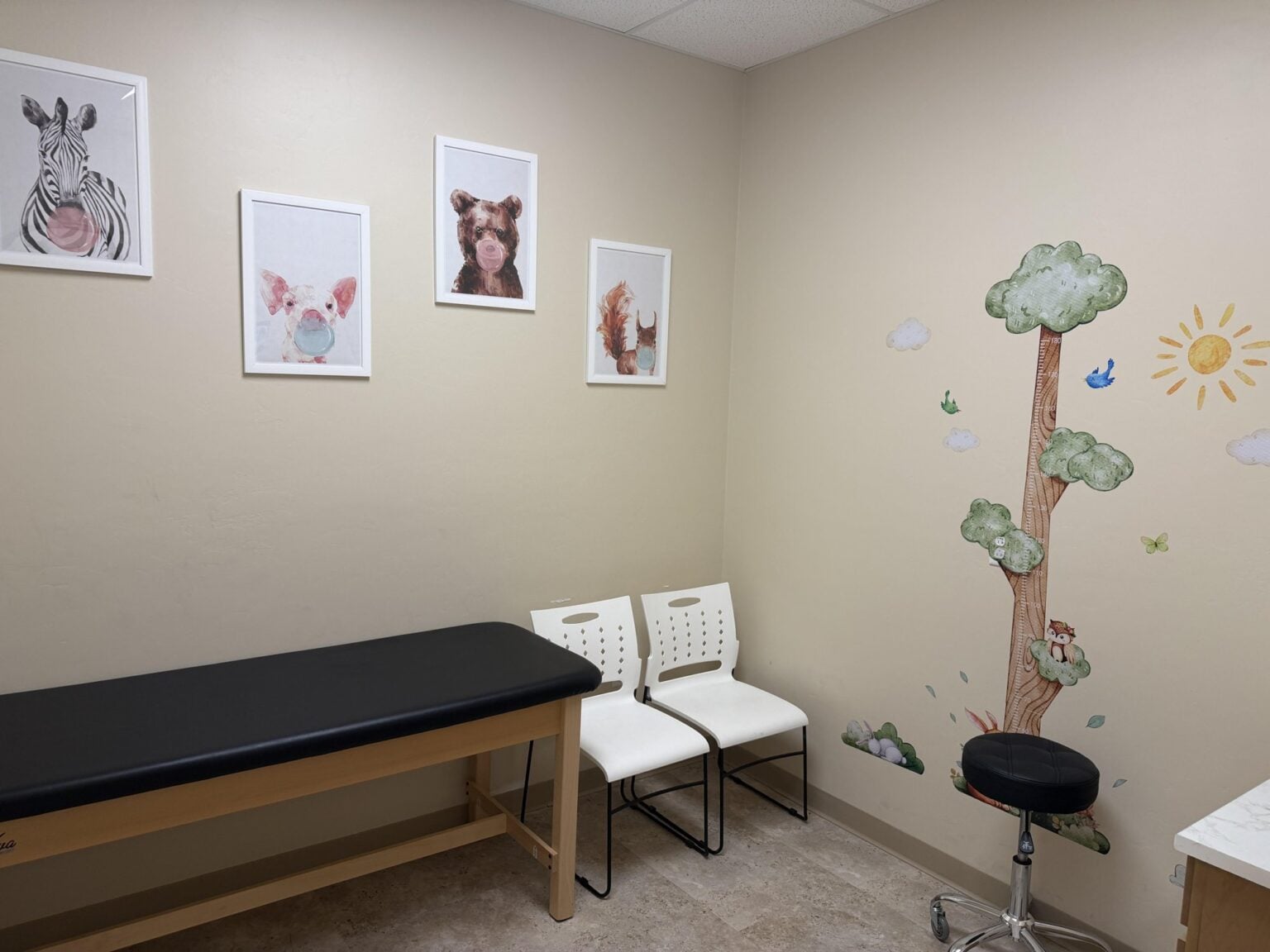
Yes. Pre-register online from the parking lot or before you leave home, and the front desk only needs your ID and insurance card when you walk in. Free parking is right at the door and the exam rooms are a few steps from the lobby.
Our typical wait time to see a medical provider is less than 15 minutes, though actual wait times may vary depending on patient volume and medical needs. Early mornings (7 to 9 AM) are usually the quietest. Two things keep visits short: strep, flu, COVID and X-ray are all done on site, so most problems are diagnosed in one stop, and online pre-registration finishes your paperwork before you arrive. Call ahead if you would like a sense of the current wait.
Further reading: Urgent Care, ER or Pediatrician? A Parent Guide (HealthyChildren.org, American Academy of Pediatrics).
We use cookies to improve your experience on our site. By using our site, you consent to cookies.
Manage your cookie preferences below:
Essential cookies enable basic functions and are necessary for the proper function of the website.
These cookies are needed for adding comments on this website.
Statistics cookies collect information anonymously. This information helps us understand how visitors use our website.
Google Analytics is a powerful tool that tracks and analyzes website traffic for informed marketing decisions.
Service URL: policies.google.com (opens in a new window)